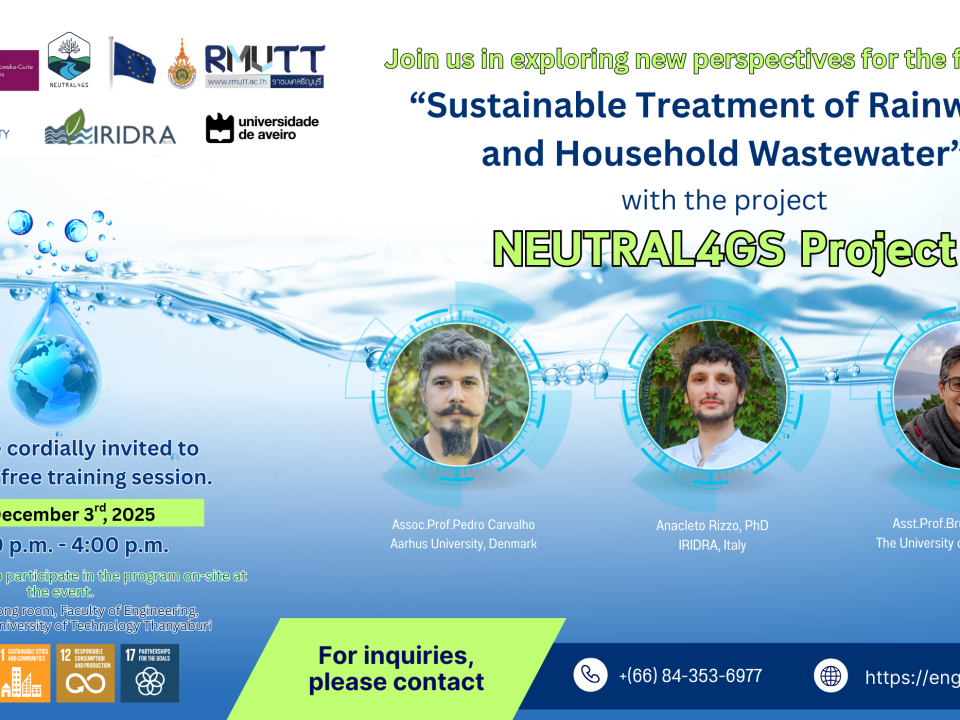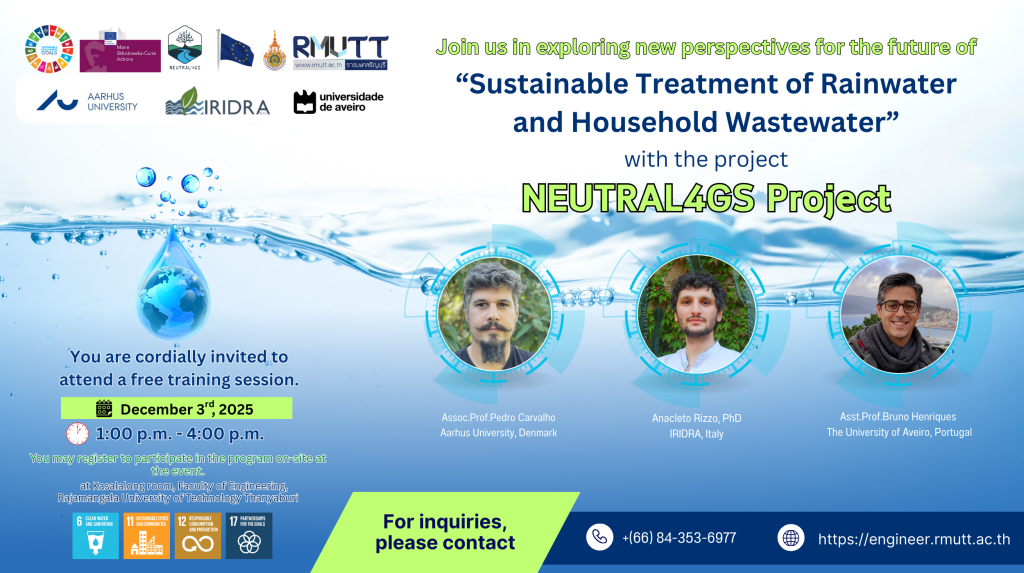
You are cordially invited to register for a free training workshop: NEUTRAL4GS: Innovation for Sustainable Rainwater and Wastewater Treatment
27/11/2025
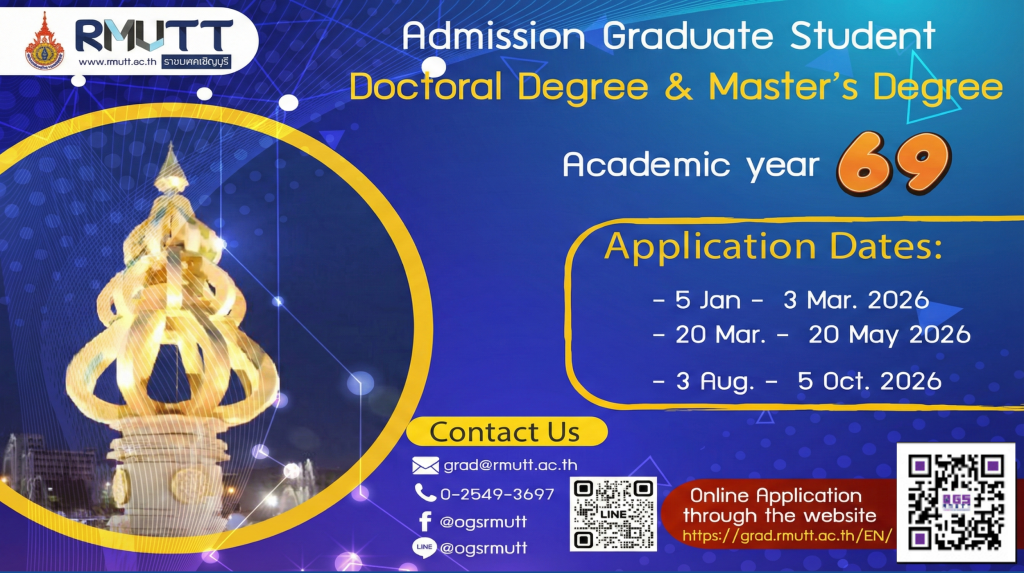
Graduate Student Admission Academic Year 2026
15/01/2026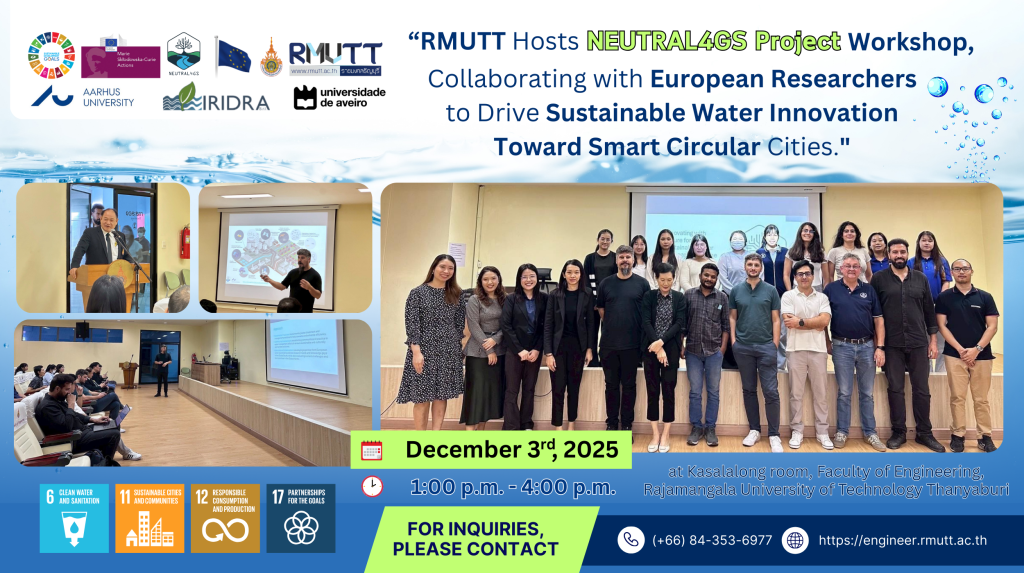
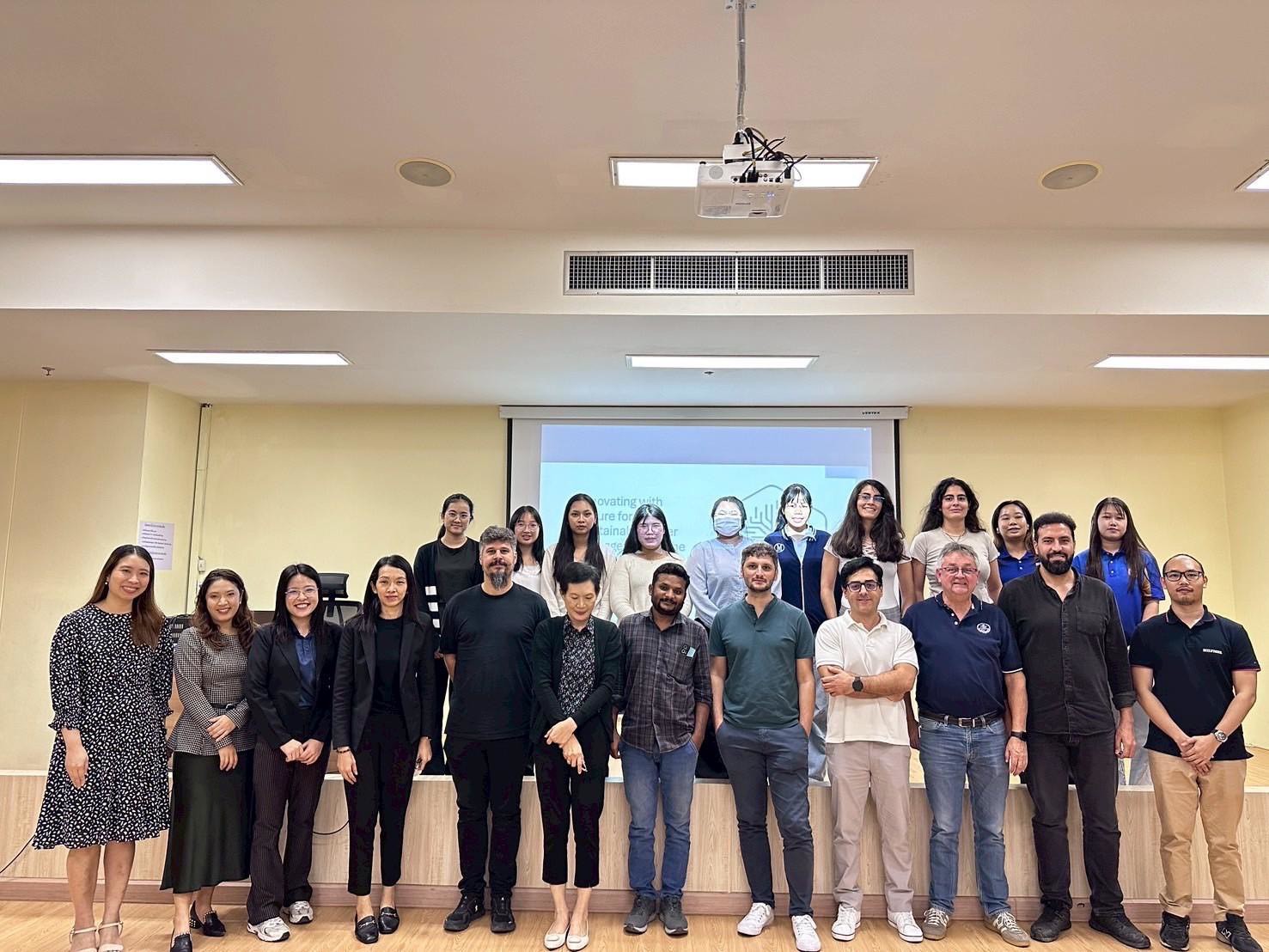
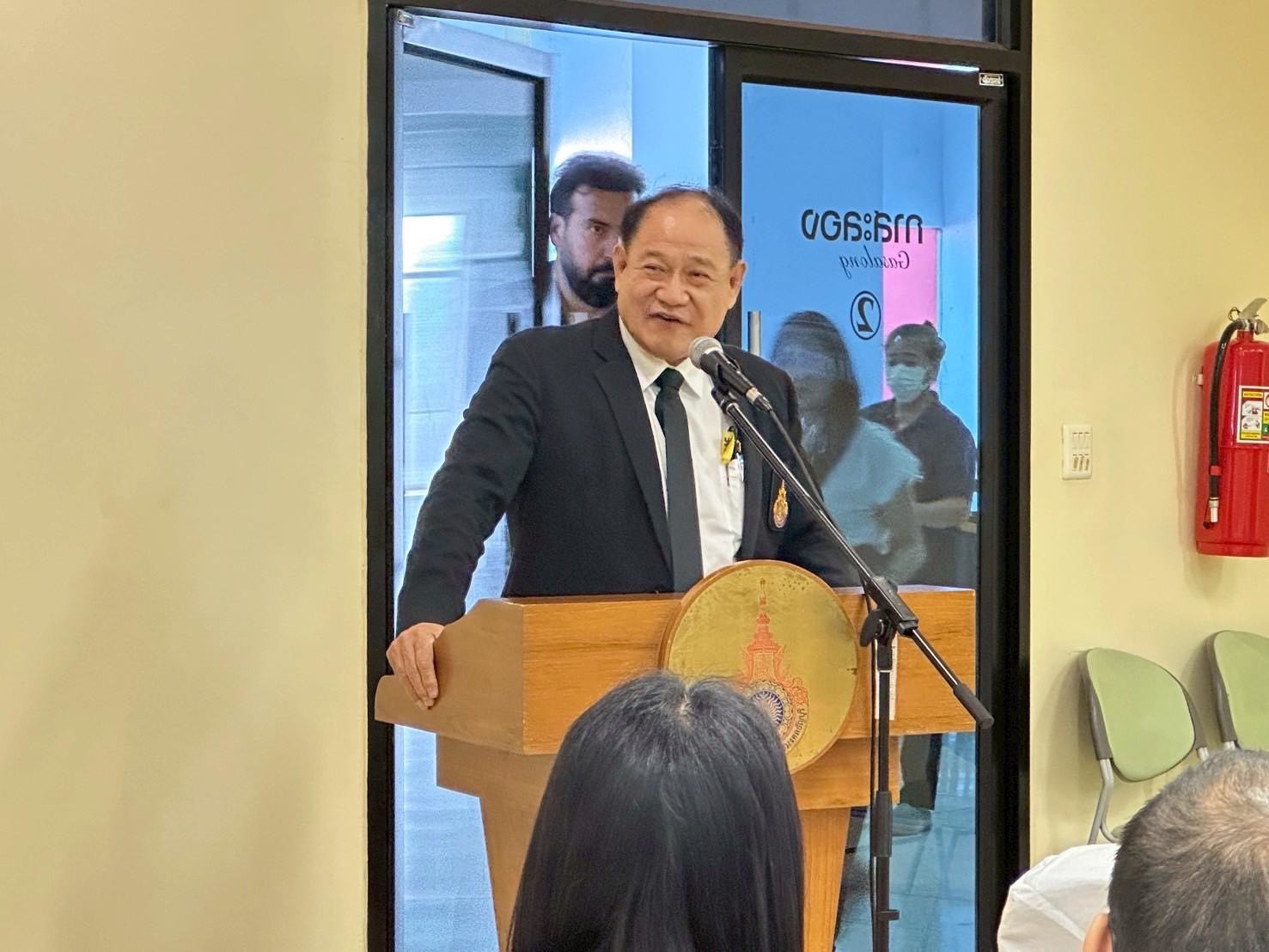
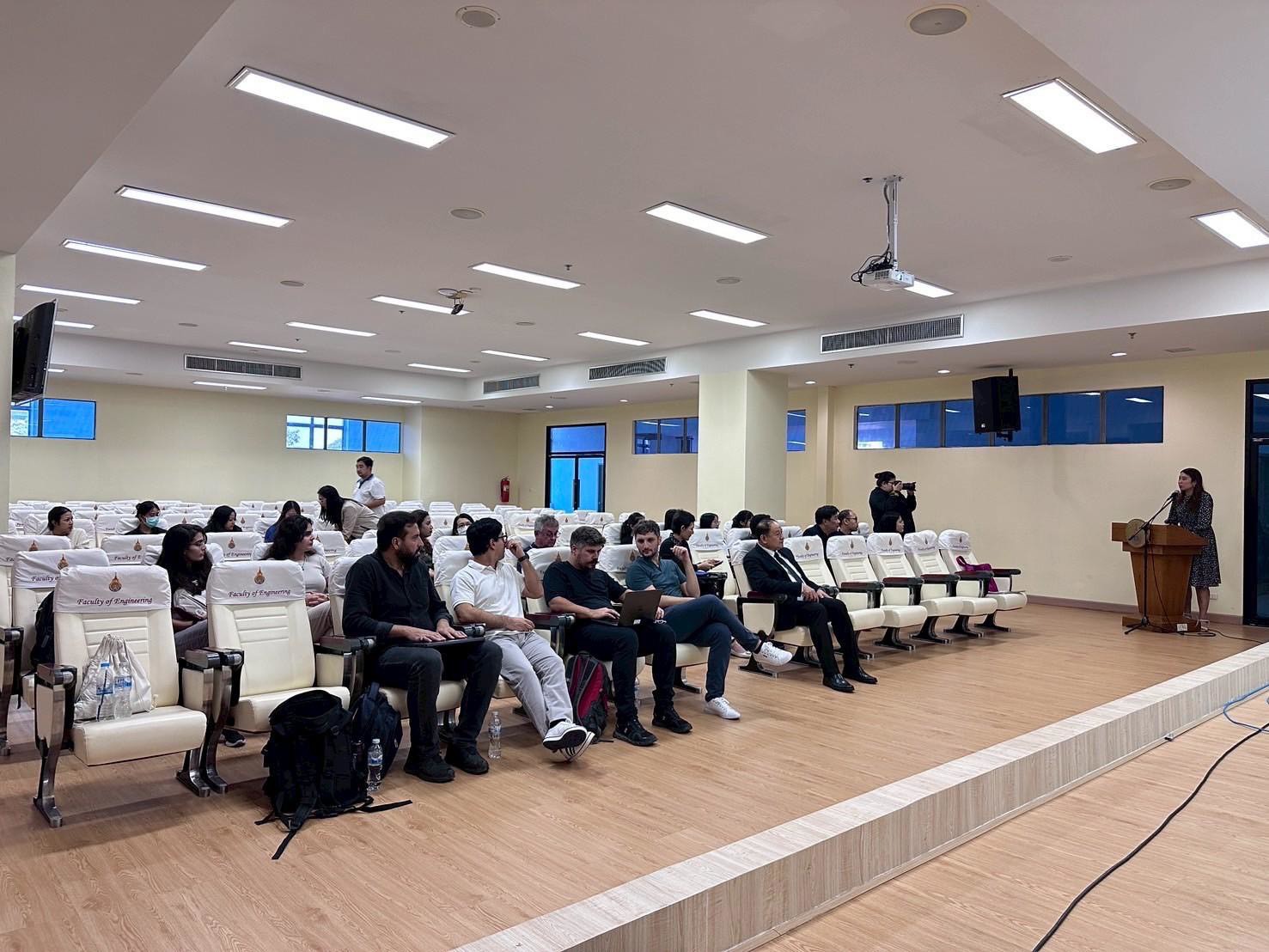
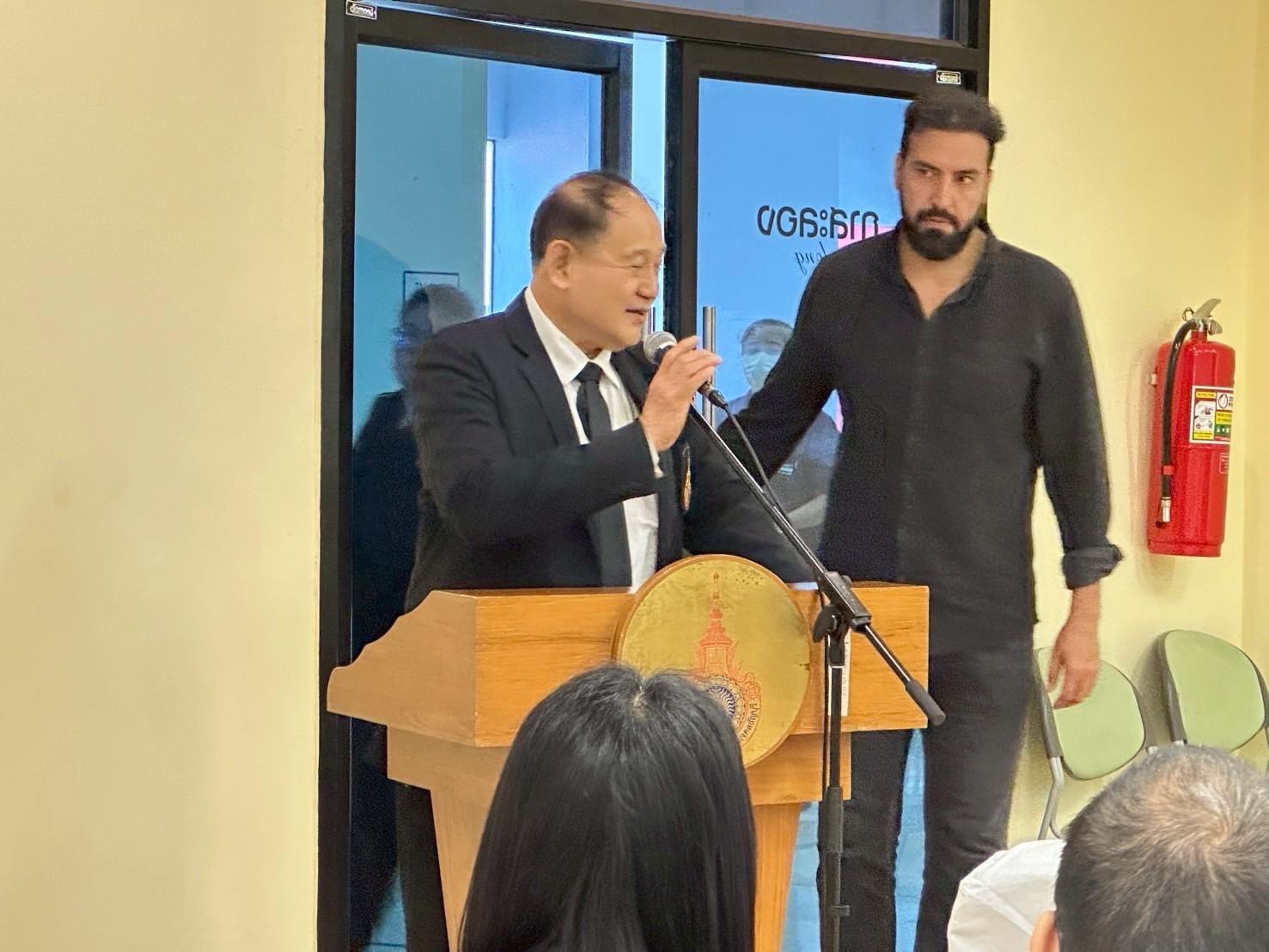
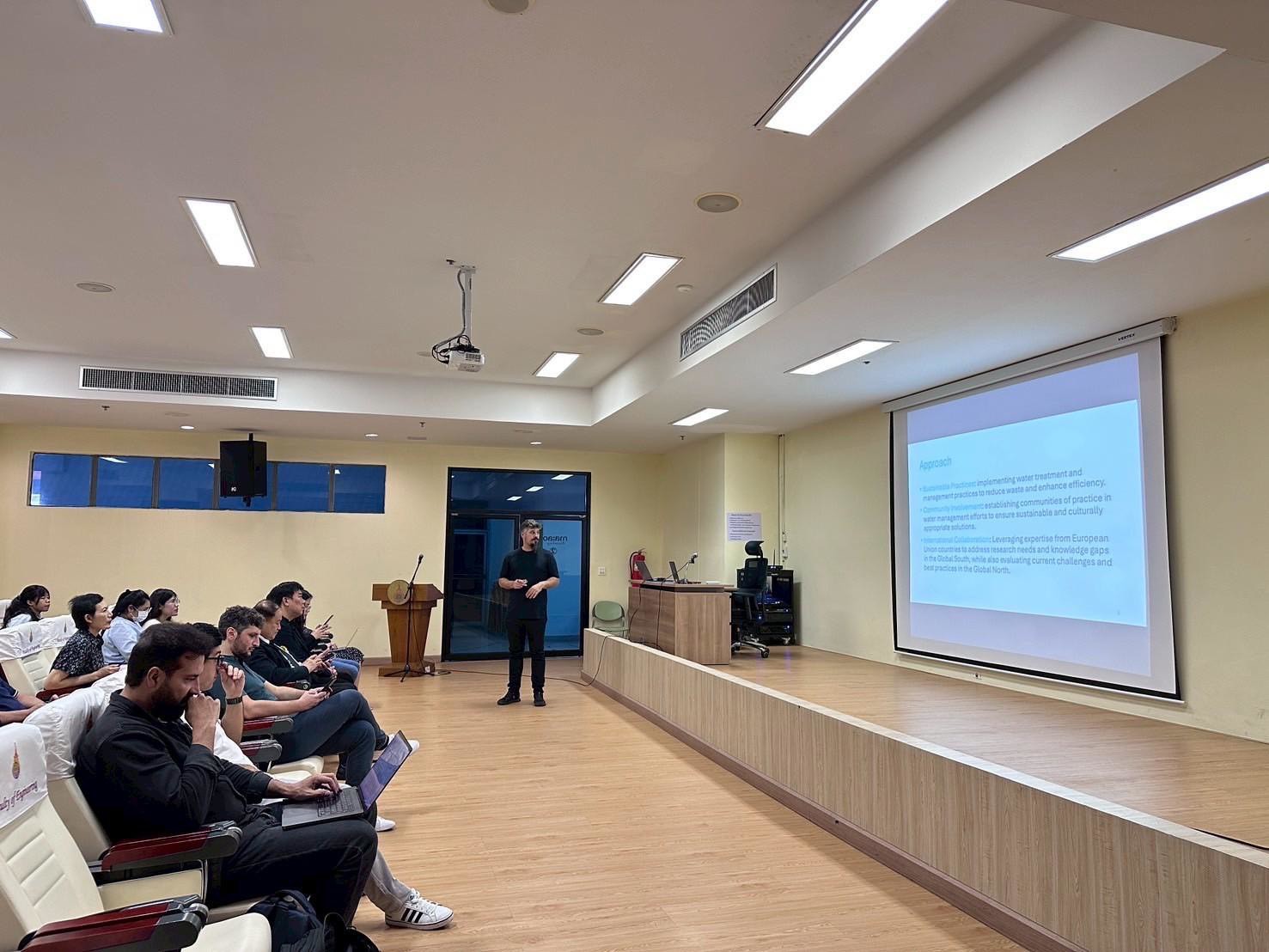
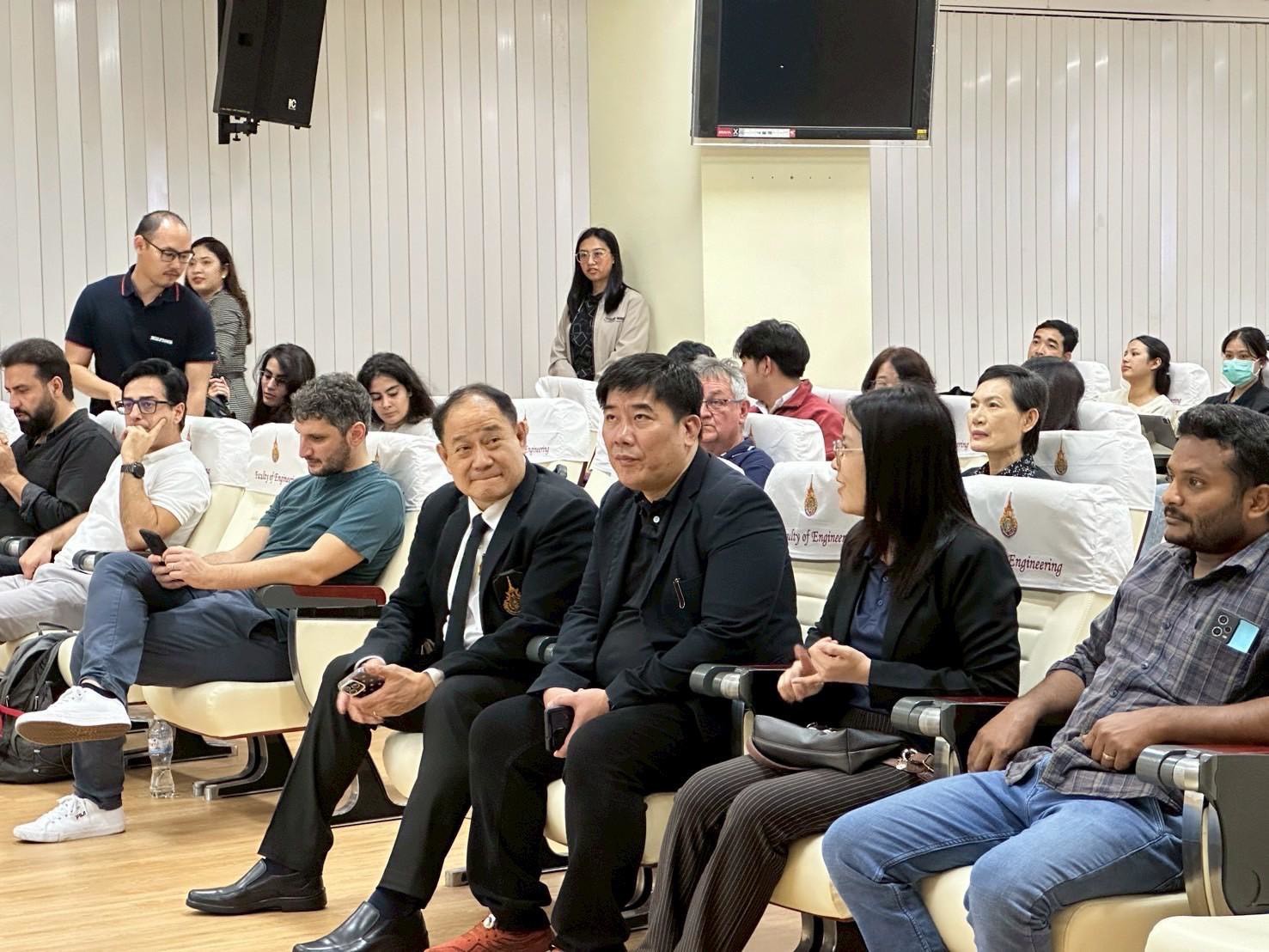
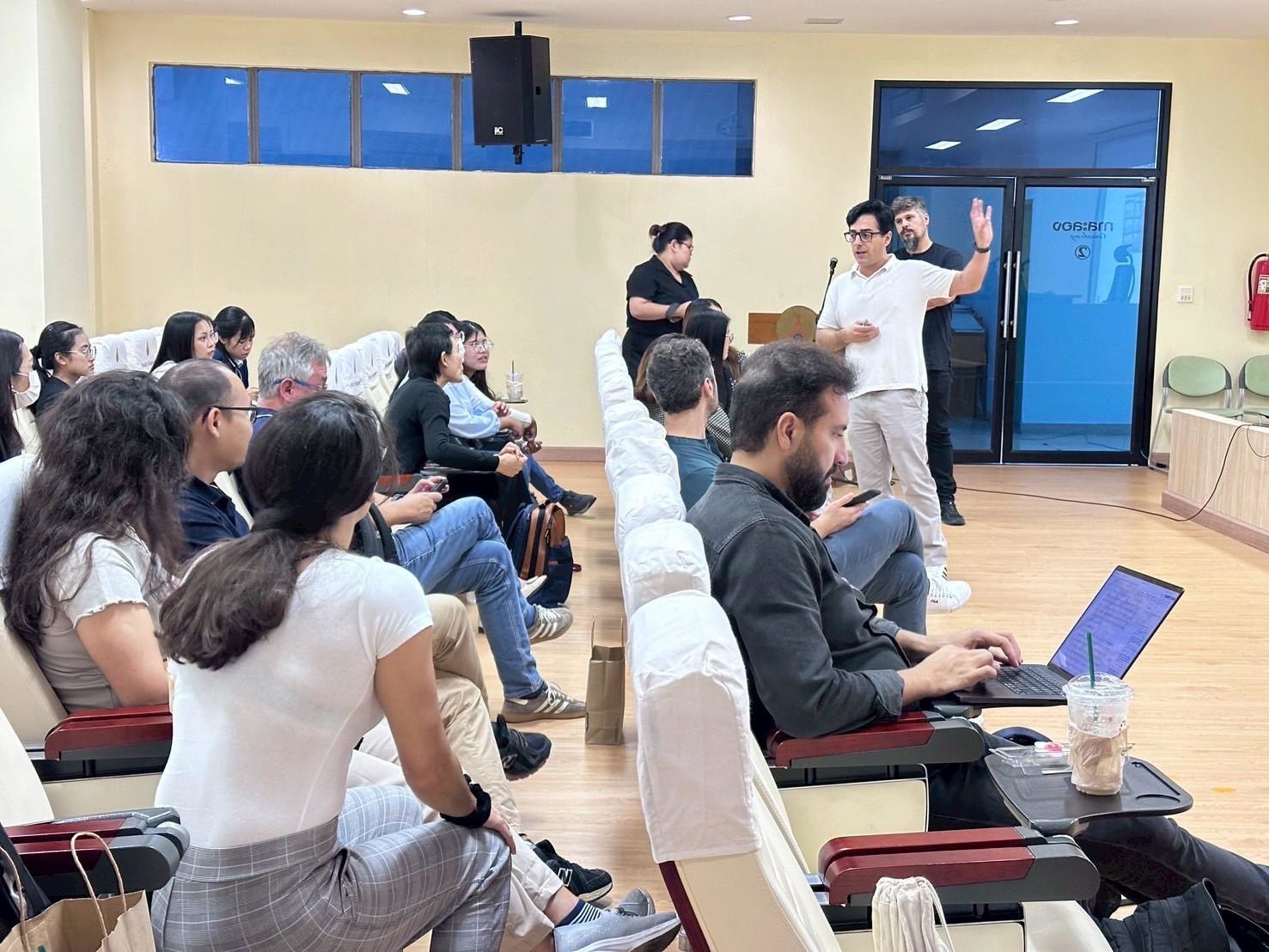
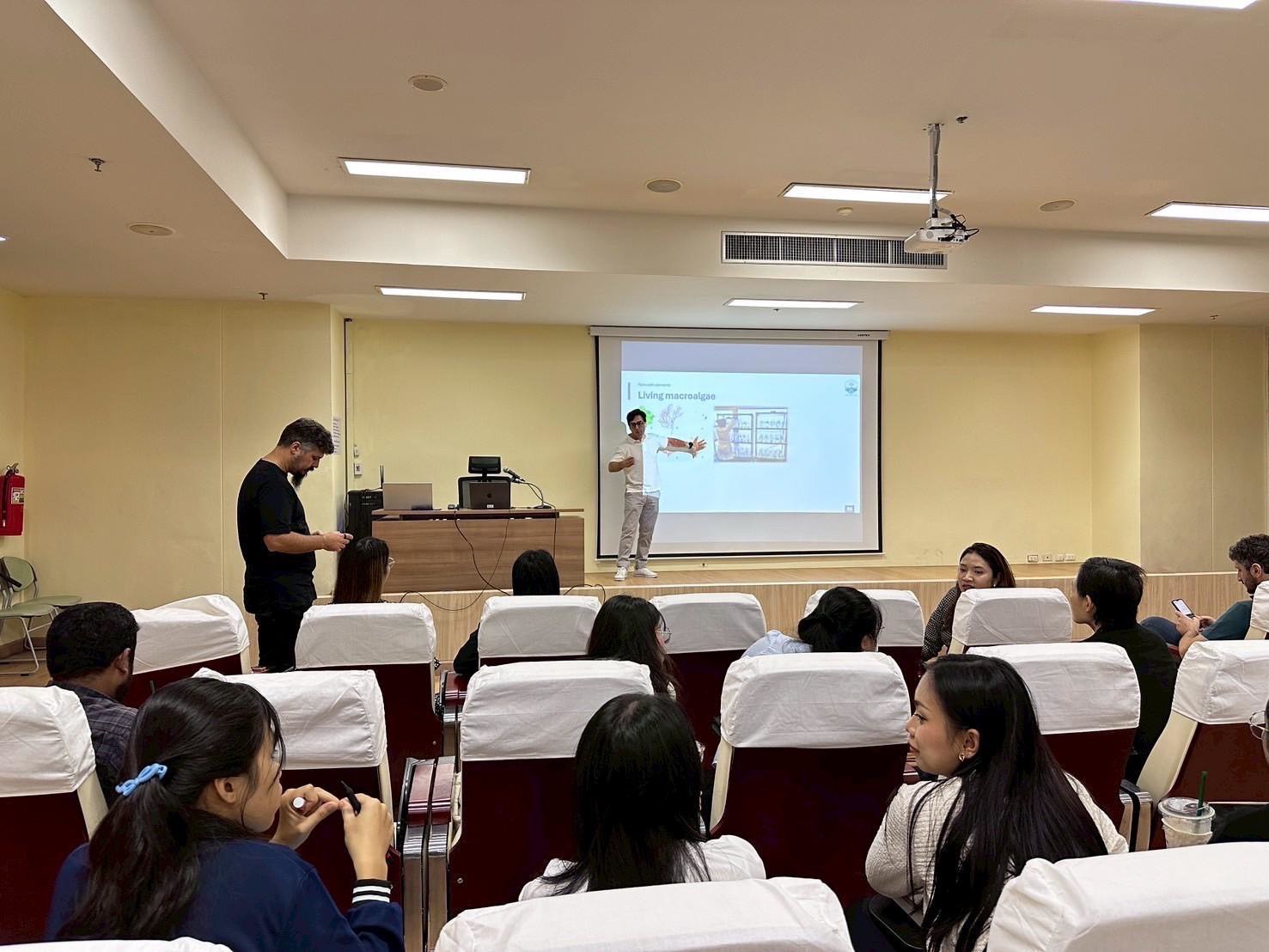
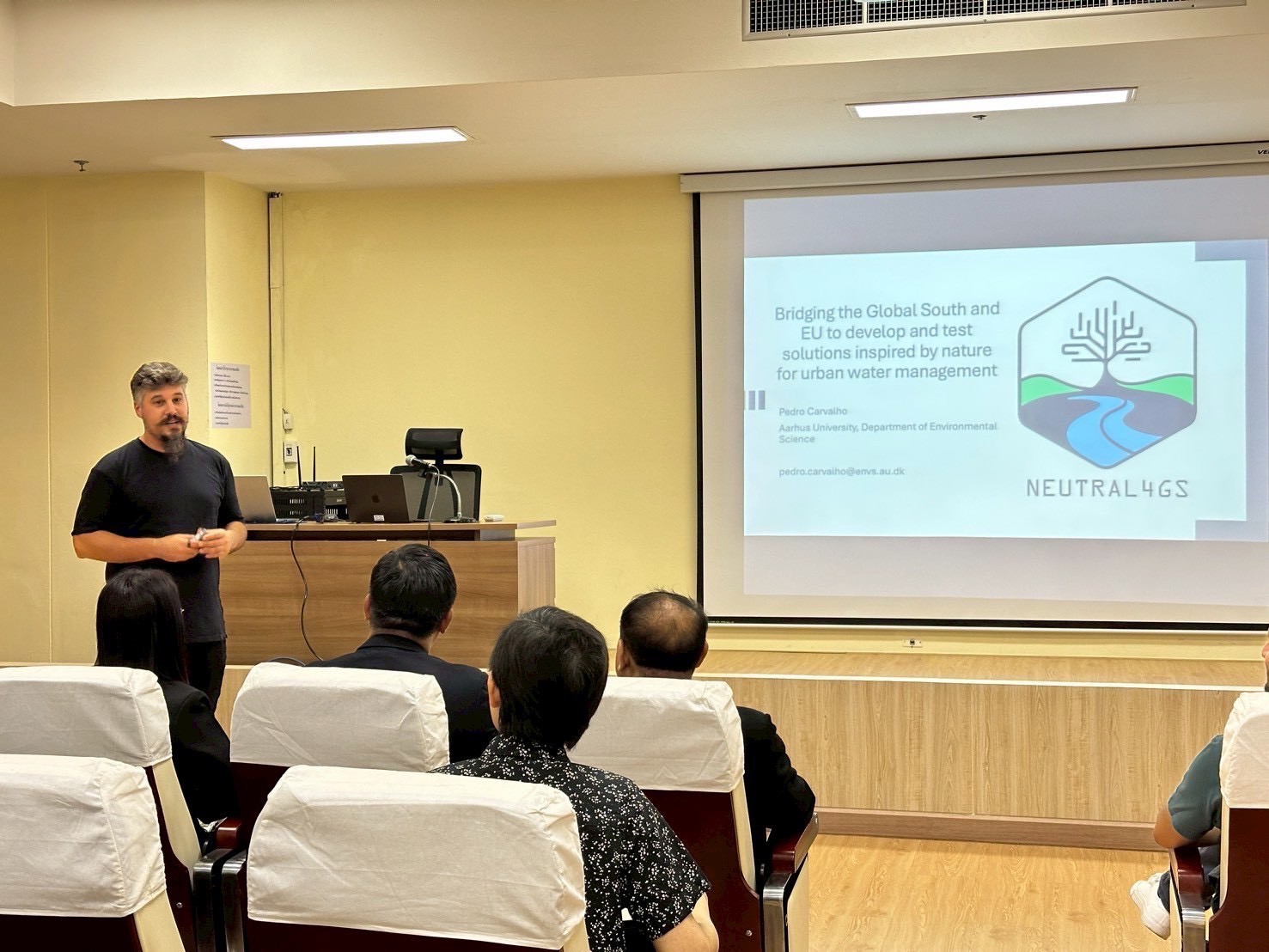
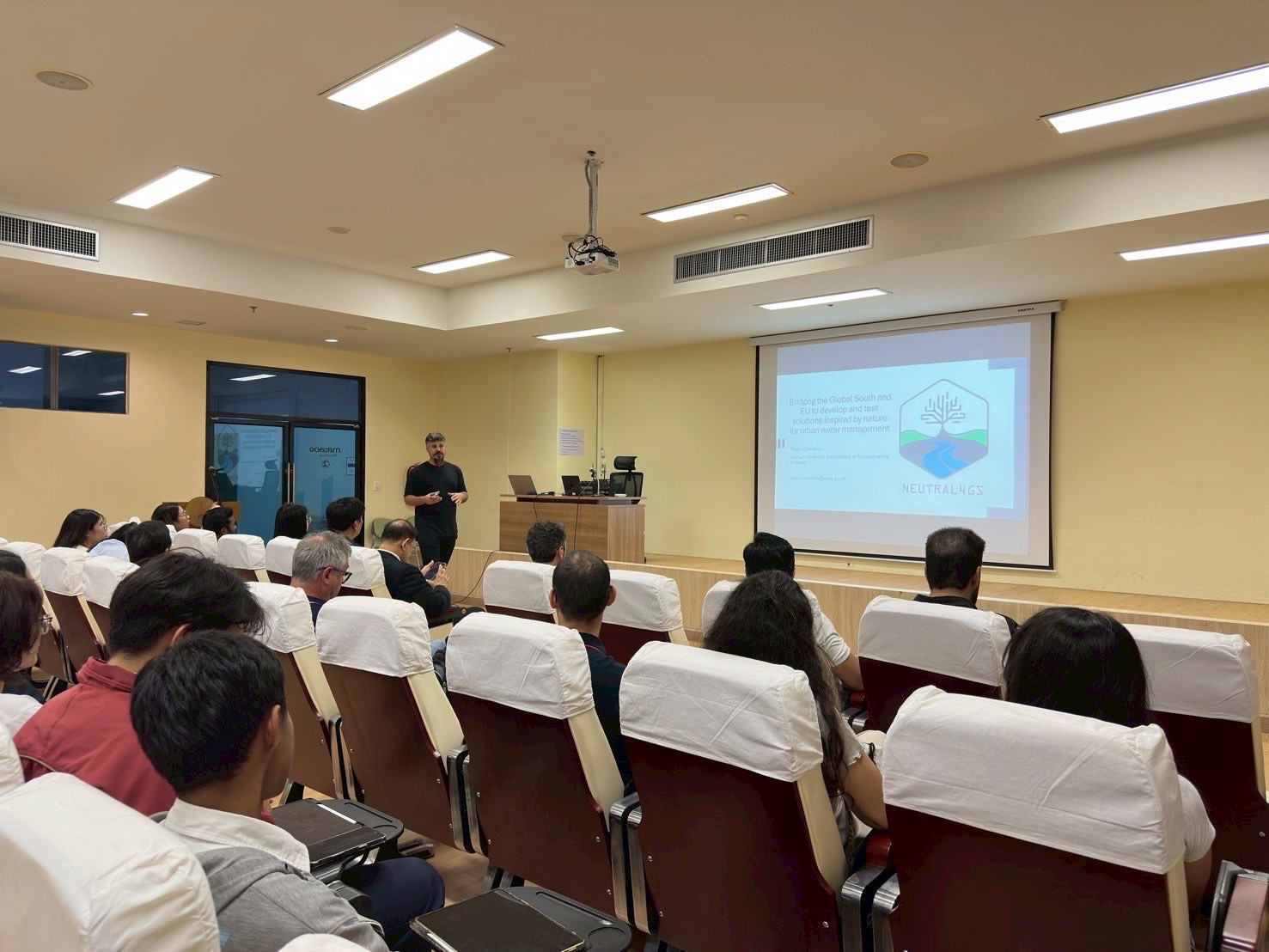
Academic Seminar on Nature-Based Water Treatment Technologies under NEUTRAL4GS Project Rajamangala University of Technology Thanyaburi (RMUTT), in collaboration with European research institutions—Aarhus University (Denmark), IRIDRA (Italy), and the University of Aveiro (Portugal)—organized an academic seminar under the NEUTRAL4GS Project. The seminar presented advances in water treatment technologies based on Nature-Based Solutions (NbS) to address urban water management challenges in alignment with the United Nations Sustainable Development Goals. The project is supported by the Marie Skłodowska-Curie Actions Staff Exchange program (2022-2023) through the European Research Executive Agency (REA) of the European Union. Nature-Based Solutions for Sustainable Water Management Nature-Based Solutions represent an approach to water management that utilizes natural processes for sustainable water quality restoration.
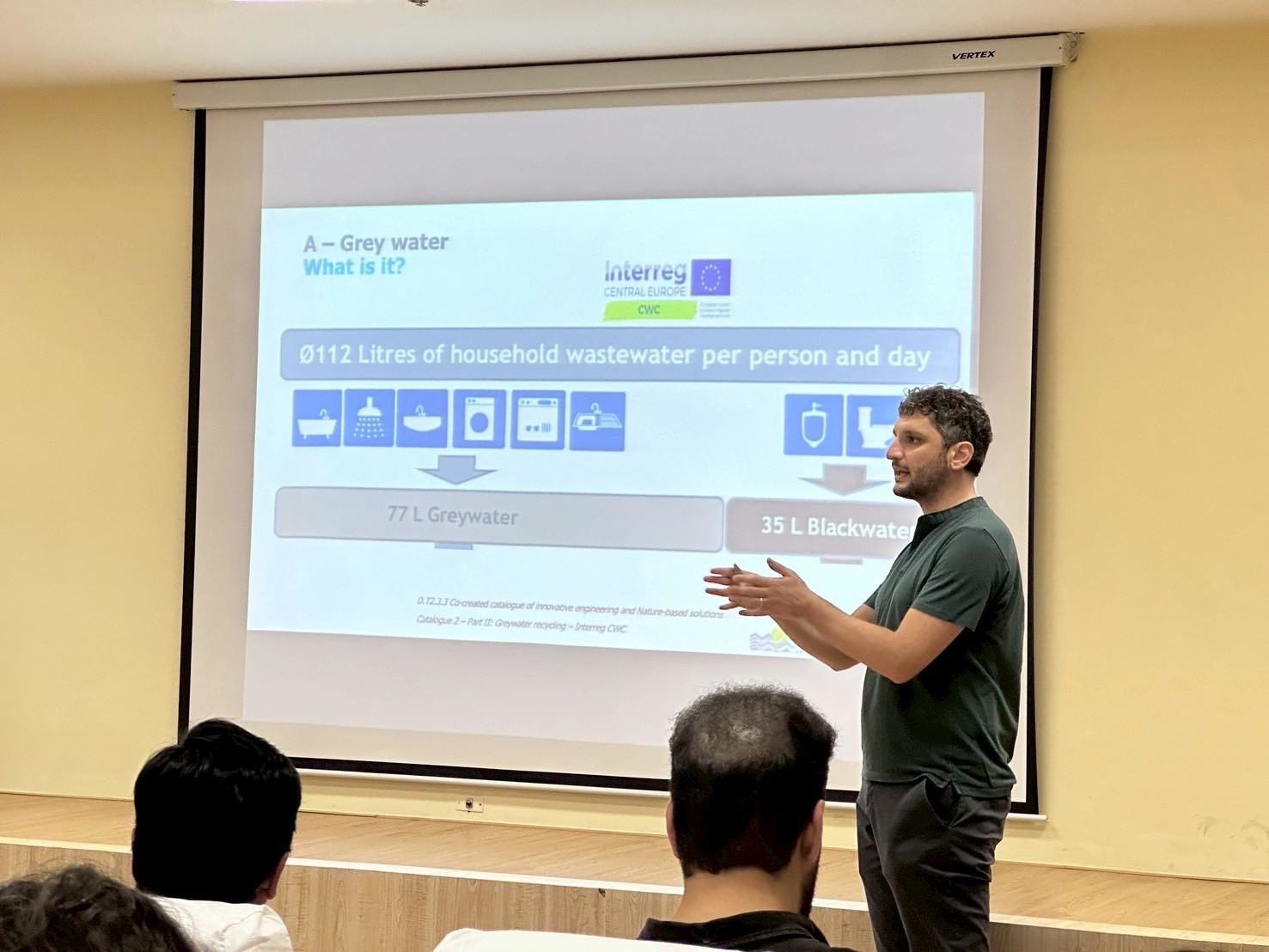
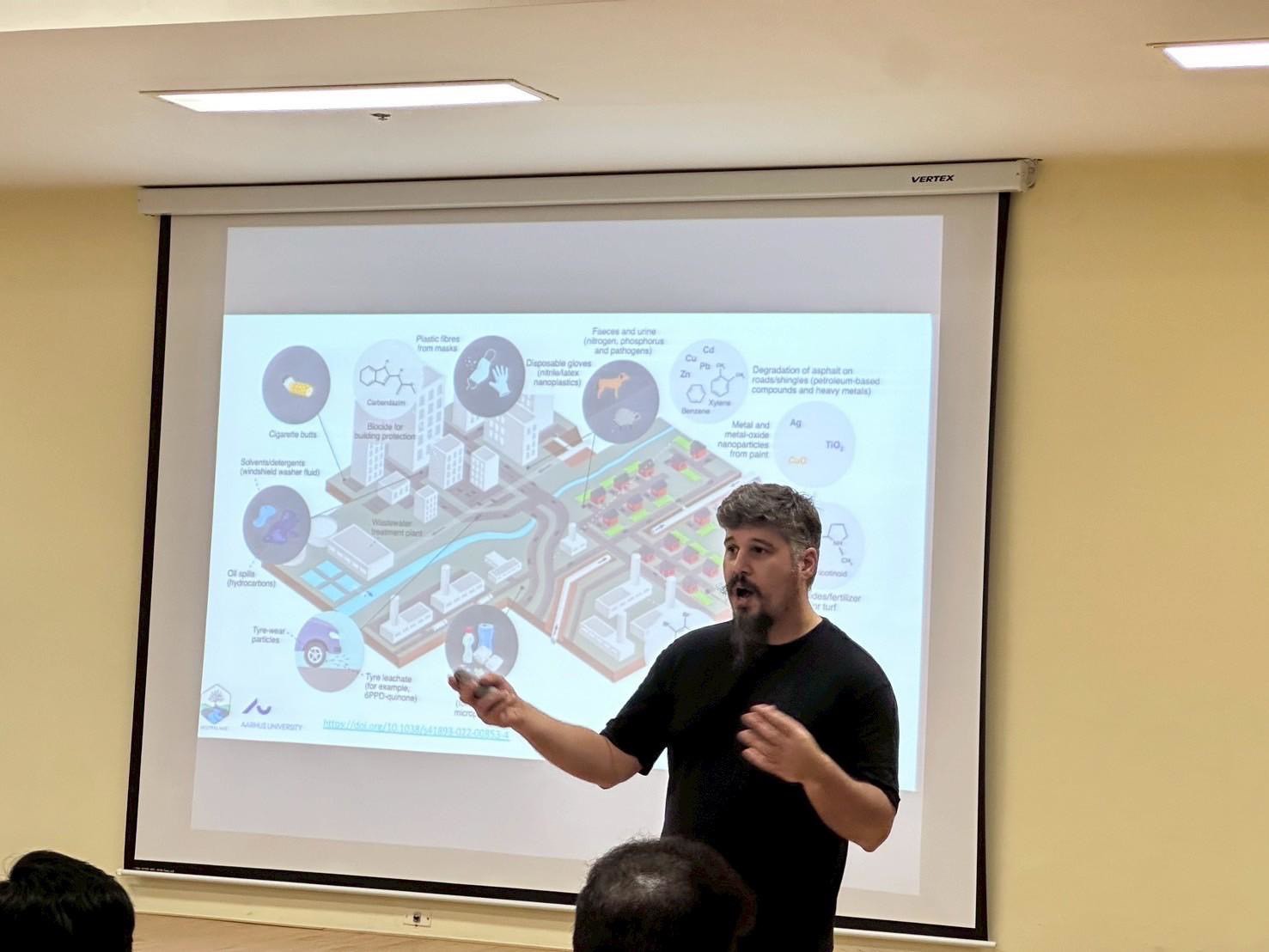
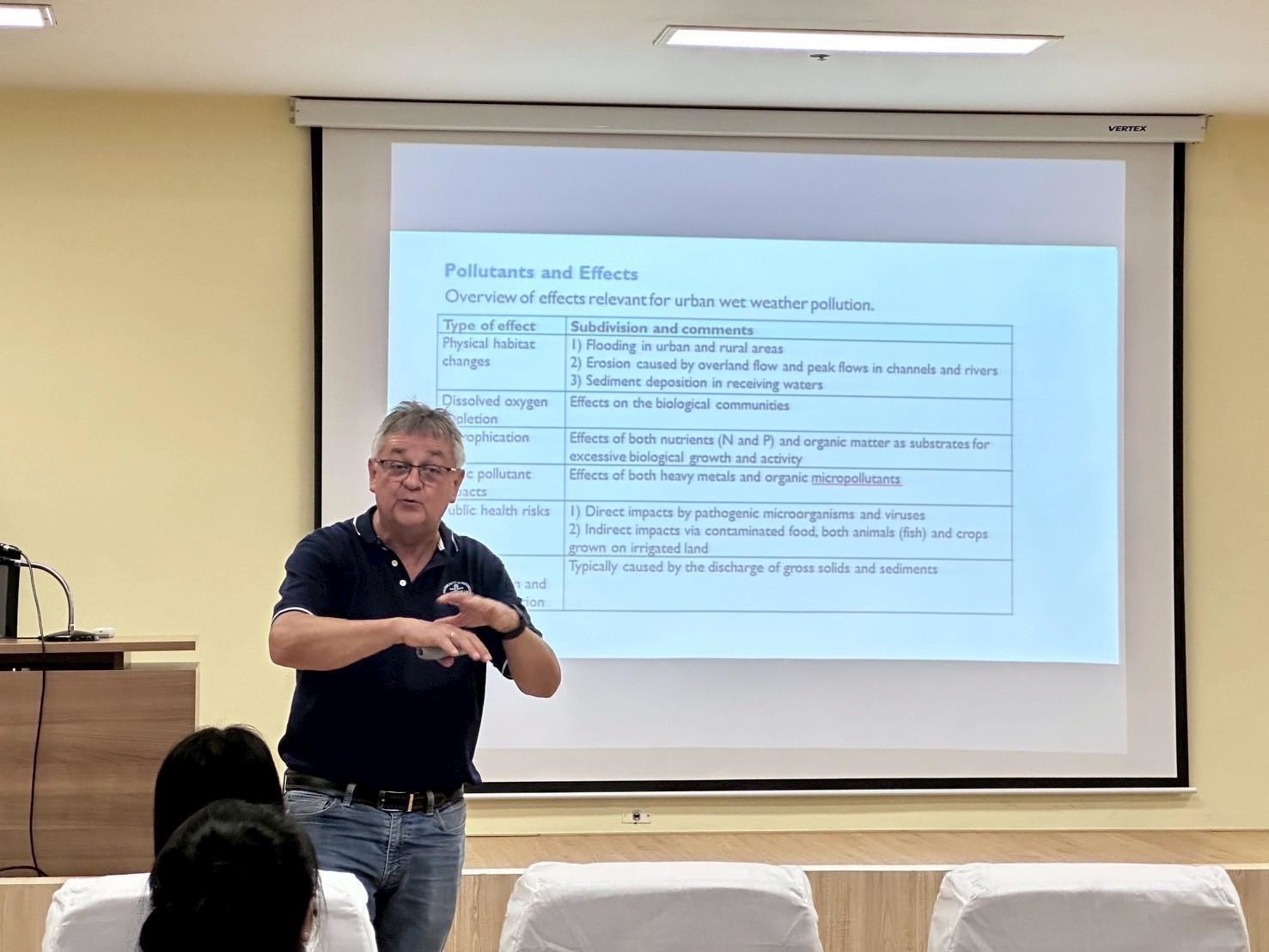
The project addresses the treatment of urban stormwater and household greywater to produce clean water suitable for reuse. Research Findings and Technologies The seminar presented research findings on several water treatment technologies, including Constructed Wetlands, Rain Gardens, Green Roofs, and Green Walls. These systems have been implemented for greywater treatment in multiple countries, including Italy, India, Lebanon, and Jordan. Experimental results on stormwater treatment demonstrated that Sand-Sorption systems achieve over 90% removal efficiency for copper and zinc from contaminated water sources. Circular Water Management and Decentralized Treatment Systems The research presented reflects current trends in urban water management that emphasize Circular Water Management and Blue-Green Infrastructure. Decentralized treatment approaches include rooftop wetlands, vertical green walls, and phytoremediation systems.
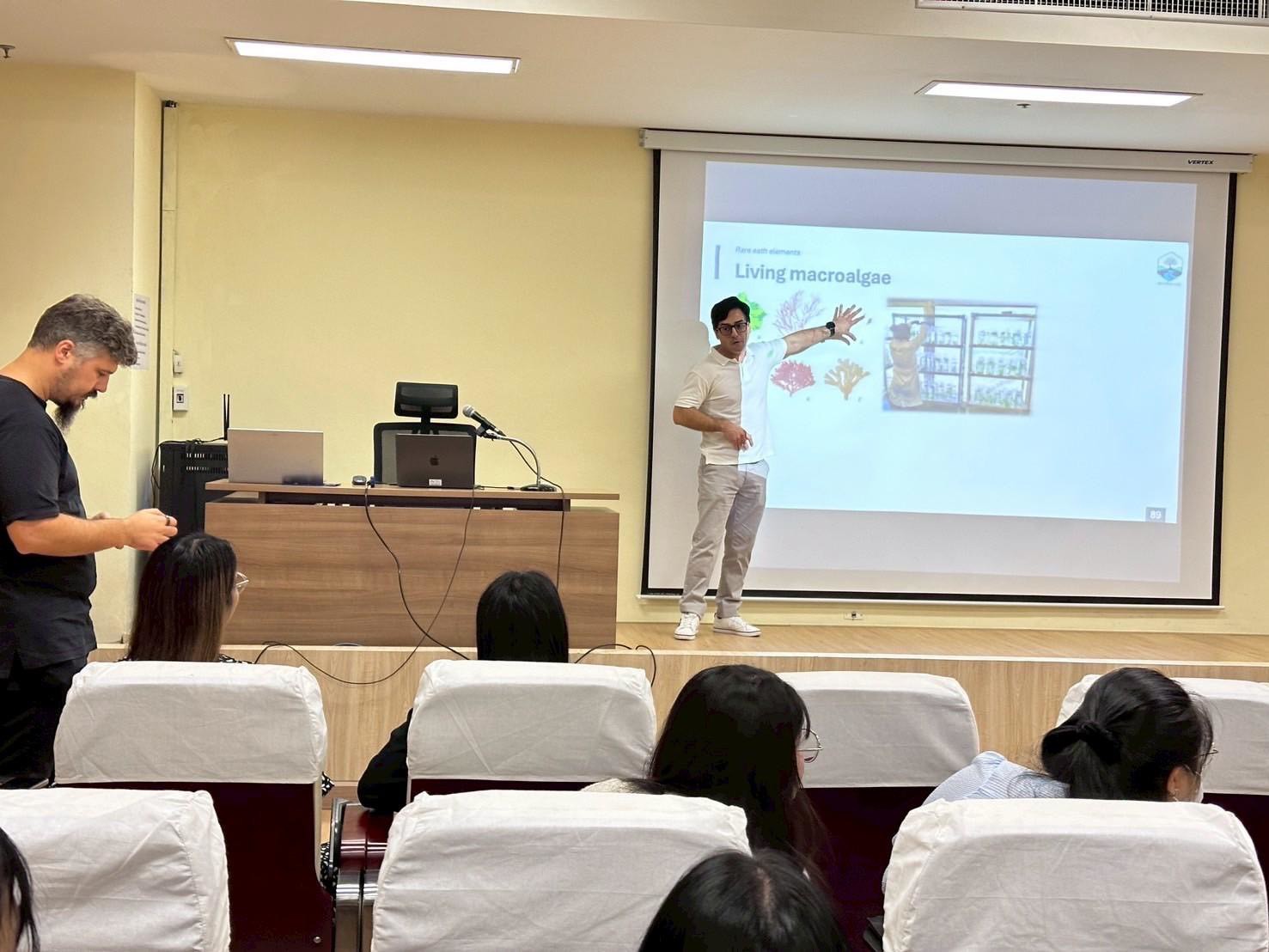
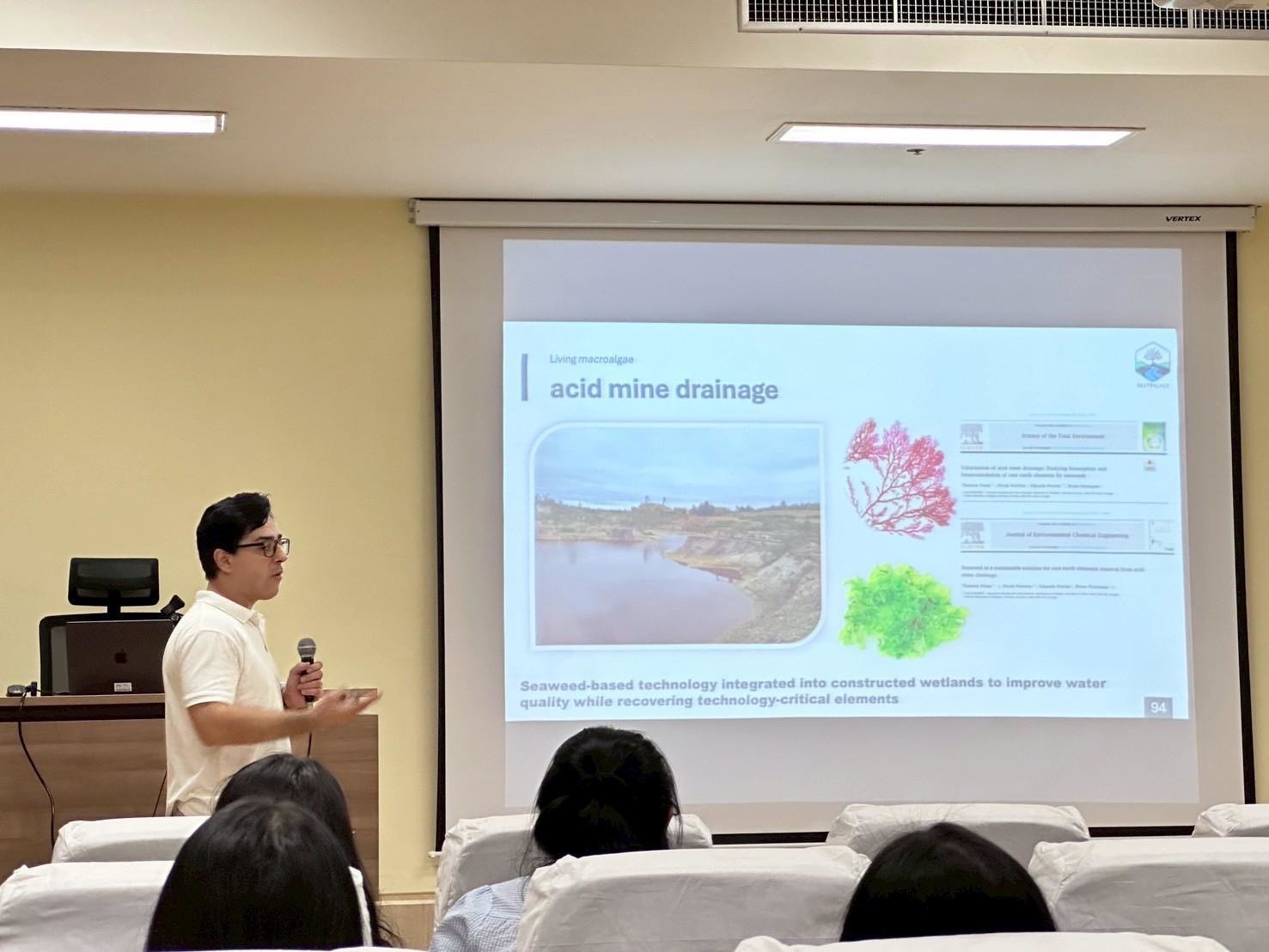
These technologies align with Smart Circular City concepts by reducing the burden on conventional centralized treatment facilities while creating urban green spaces and enabling water reuse. An additional focus of the seminar was algae-based adsorption technology for wastewater treatment. Research indicates that various algae species demonstrate effective adsorption capacity for heavy metals and micropollutants in water. Implementation Goals and Sustainable Development Objectives RMUTT aims to expand research collaboration to assess the feasibility of implementing these technologies in urban communities. Target applications include addressing stormwater pollution, flash flooding, and developing greywater treatment systems for residential buildings, hospitals, schools, and communities. The project contributes to several UN Sustainable Development Goals, primarily SDG 6: Clean Water and Sanitation. Additional contributions include SDG 3: Good Health and Well-being through reduced waterborne disease risk, SDG 11: Sustainable Cities and Communities through green infrastructure development, SDG 13: Climate Action through reduced greenhouse gas emissions from water treatment processes, and SDG 15: Life on Land through ecosystem conservation. The NEUTRAL4GS Project aligns with the EU Green Deal and the New Wastewater Treatment Directive, supporting objectives related to zero pollution and circular economy principles to enhance water security and long-term environmental sustainability.